
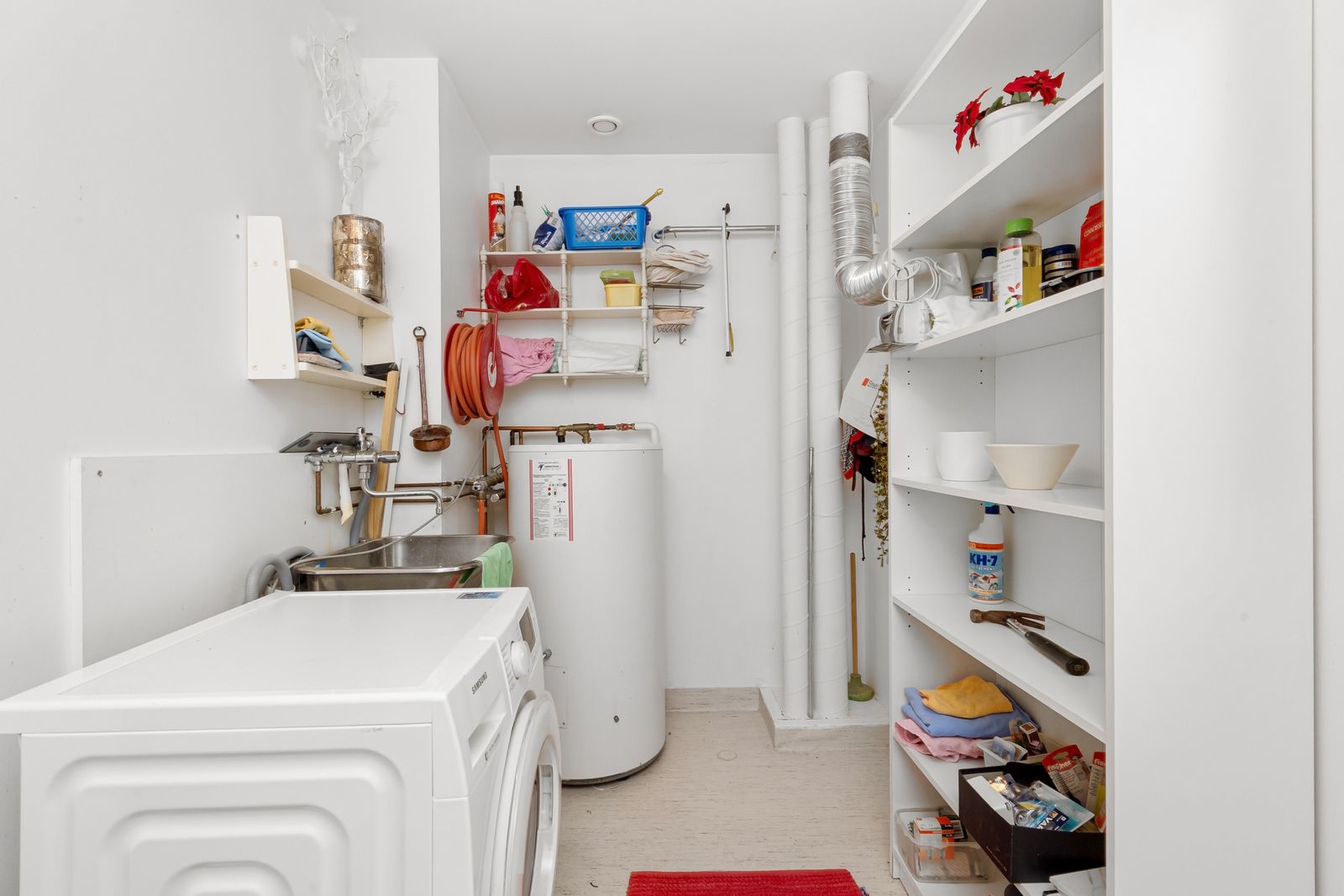
A small laundry zone works better when every inch supports the order in which clothes actually move through it.
A cramped laundry corner can feel chaotic even when it contains only a few things. The problem is usually movement, not square footage. Dirty clothes arrive, pockets need checking, detergent is measured, clean pieces need somewhere to land, and hang-dry items must go up quickly. When those steps overlap, the room fills with piles. A better layout follows the path of the laundry itself.
Map the trip from hamper to drawer
Stand in the space and walk through one normal load. Where do you sort it? Where do loose coins and tissues go? Where do you place a clean shirt before folding it? Give each pause point a simple home. A narrow basket can collect pocket finds, a washable bin can hold lone socks, and a clear section of counter can remain deliberately empty for folding.

Use height before buying storage
The wall above a washer often has more potential than the floor. A secure shelf can hold detergent and stain tools, while hooks can support a small mesh bag or reusable laundry tote. Keep heavy containers at a comfortable lifting height and follow the appliance maker’s clearance guidance. A tension rod or properly mounted rail may create a short hang-dry zone without adding a cabinet.
Reduce the number of open decisions
Too many baskets can create more sorting, not less. Use labels that match your real routine, such as lights, darks, towels, or air-dry. Decanting is optional; original packaging often keeps instructions and safety information clearer. If you do transfer a product, label it accurately and store it away from children and pets. The system should make laundry faster, not merely prettier.
Make the choice work in real life
Protect one empty landing surface and return supplies after every load. That small discipline gives the room breathing space. You do not need a renovation. You need a sequence that lets the next shirt know exactly where to go.