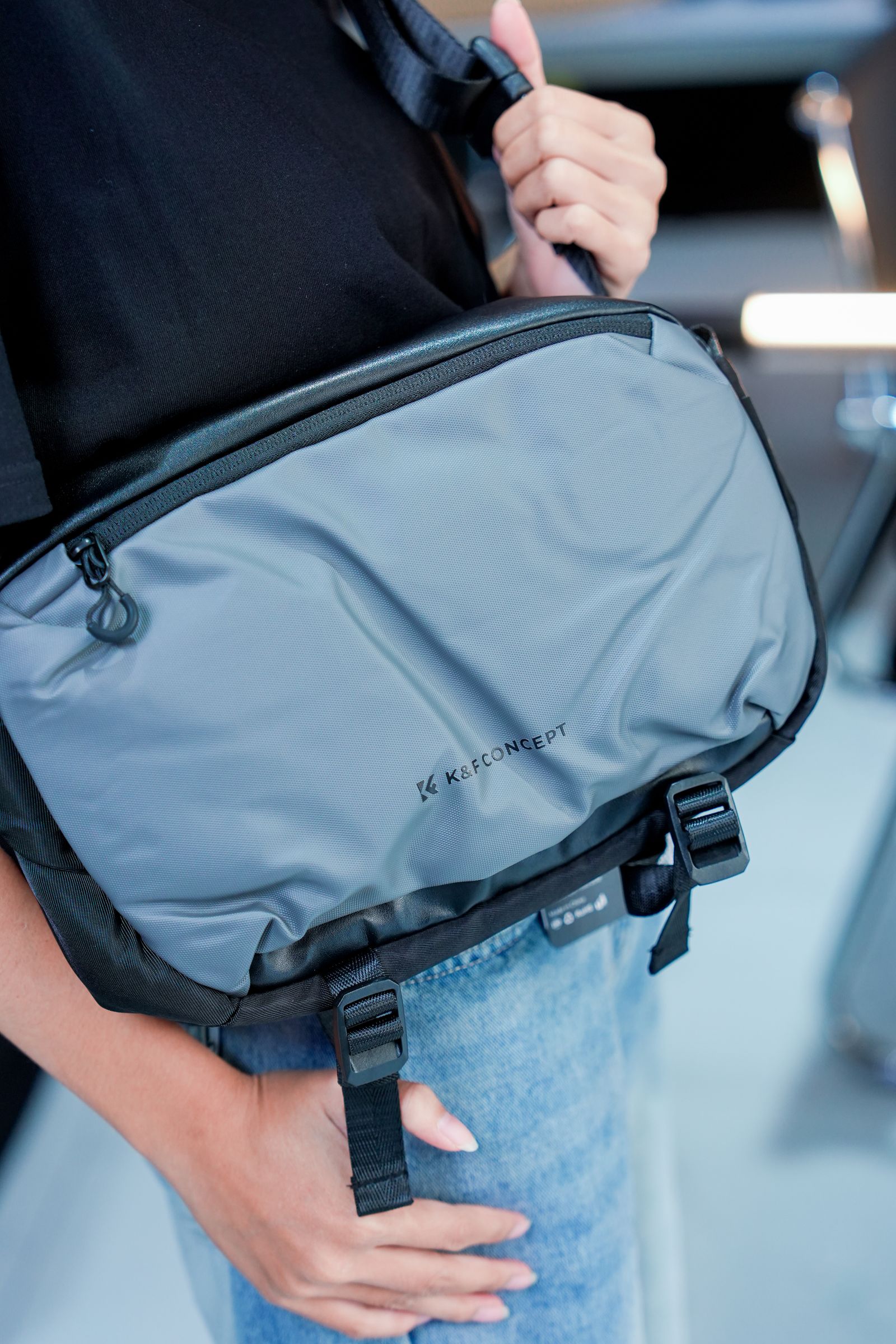

The right work tote begins with a realistic packing list and ends with a bag you can carry without searching or strain.
A work tote is often judged while empty, under bright shop lights, with nothing more demanding inside than tissue paper. Your morning is a better test. A laptop, charger, water bottle, keys, lunch, notebook, and small personal items quickly turn an elegant shell into a heavy mobile drawer. Choose the bag around that real load and the way you travel.
Pack the contents before you shop
Place a normal workday’s items on a table and measure the largest one, usually a laptop or document folder. Separate essentials from things that have simply accumulated. If the load already feels excessive, editing it is more helpful than buying a larger tote. Take key dimensions and, when possible, bring the protected laptop sleeve you actually use.

Inspect structure and carry comfort
Check the base, seams, handle attachments, and closure. A bag that stands open can be easy to pack, while a zip or secure top may matter on public transport. Try the loaded bag on your usual coat. Handles should sit comfortably on the shoulder or in the hand without sharp edges. An optional crossbody strap can distribute weight, but only if the attachment points feel solid.
Demand an interior you can navigate
You need fewer pockets than marketing suggests, but the right ones matter. A quick-access place for keys, a protected area for electronics, and a wipeable zone for a bottle can prevent daily frustration. Dark linings hide marks but can also hide small objects. A removable pouch is useful for items that move between bags.
Make the choice work in real life
Load the tote before deciding. Walk, sit, reach for your keys, and imagine the busiest part of the commute. A good work bag should organize the morning without becoming another problem you carry into it.